Film • Press • Family archive

The story,
documented.

The Ashok Vaidya legacy has been revisited across documentary film, food writing, Marathi press and family archives. Together, these records help connect the iconic Mumbai snack back to Dadar Station and the people behind the story.

आठवणी, पुरावे आणि पिढ्यान् पिढ्या सांगितली गेलेली गोष्ट.

A STORY THAT KEPT GETTING RETOLD.

1. Ashok Vaidya is widely credited with the 1966 Dadar Station origin story. 2. The first customers are commonly described as commuters and workers travelling through central Mumbai’s mill belt. 3. Ashok Vaidya died in 1998. 4. His son Narendra Vaidya continued the family business at Dadar Station. 5. The Vaidya family story has remained rooted in Dadar Station across generations, carrying the memory of the original street-food moment forward.
Ashok Vaidya Dadar Station Est. 1966 Vada Pav Inc. Virtual Bharat Narendra Vaidya Ashok Vaidya Dadar Station Est. 1966 Vada Pav Inc. Virtual Bharat Narendra Vaidya
The media position

One family.
One station.

Every part of the story returns to the Ashok Vaidya family, the Dadar Station stall and the city that turned a practical street-food idea into a cultural memory.

Historical accounts commonly describe Ashok Vaidya as “widely credited” with the 1966 origin story, while the family continuity through Narendra Vaidya keeps the Dadar Station connection alive.

FounderAshok Vaidya
Origin year1966 • widely cited
LocationDadar Railway Station
Next generationNarendra Vaidya
Core storyMumbai food at commuter speed
Watch the Mumbai story

Two lenses on
one city-defining bite.

One film looks at vada pav as a Mumbai-wide comfort food; the other returns to the Vaidya family and the Dadar Station origin story. Both are embedded directly from YouTube using privacy-enhanced players.

Great Big Story • Mumbai food culture

Why the Vada Pav Is Mumbai’s Best Sandwich

A city-wide look at the snack’s essential formula: golden fried potato, pillowy pav and chutney, a compact comfort food that works from breakfast through dinner and across Mumbai’s street-food landscape.

Watch on YouTube ↗
Archive • Documentary

Vada Pav Inc.

An earlier documentary reference in the site archive, useful for understanding how the vada pav grew from street-side fuel into an economy and a cultural shorthand for Mumbai.

Watch on YouTube ↗

If an embedded player is blocked by a browser, use the “Watch on YouTube” link directly beneath that video.

1966 • Dadar Station
A food
origin story.

Ashok Vaidya is widely credited with pairing batata vada and pav outside Dadar Station for a fast-moving commuter and mill-worker crowd.

Why the story keeps travelling

Simple food.
Big cultural memory.

The strongest coverage does not only ask who invented a snack. It asks why this particular format belonged so naturally to Mumbai.

Affordable, portable, vegetarian and easy to eat while standing or commuting, vada pav became a working-city solution before it became a symbol.

From the project media archive

Printed memory.
Street-side life.

The archive works best when each image keeps its natural shape. Newspaper pages are shown in full; portrait street photographs stay portrait; food imagery gets a tighter crop.

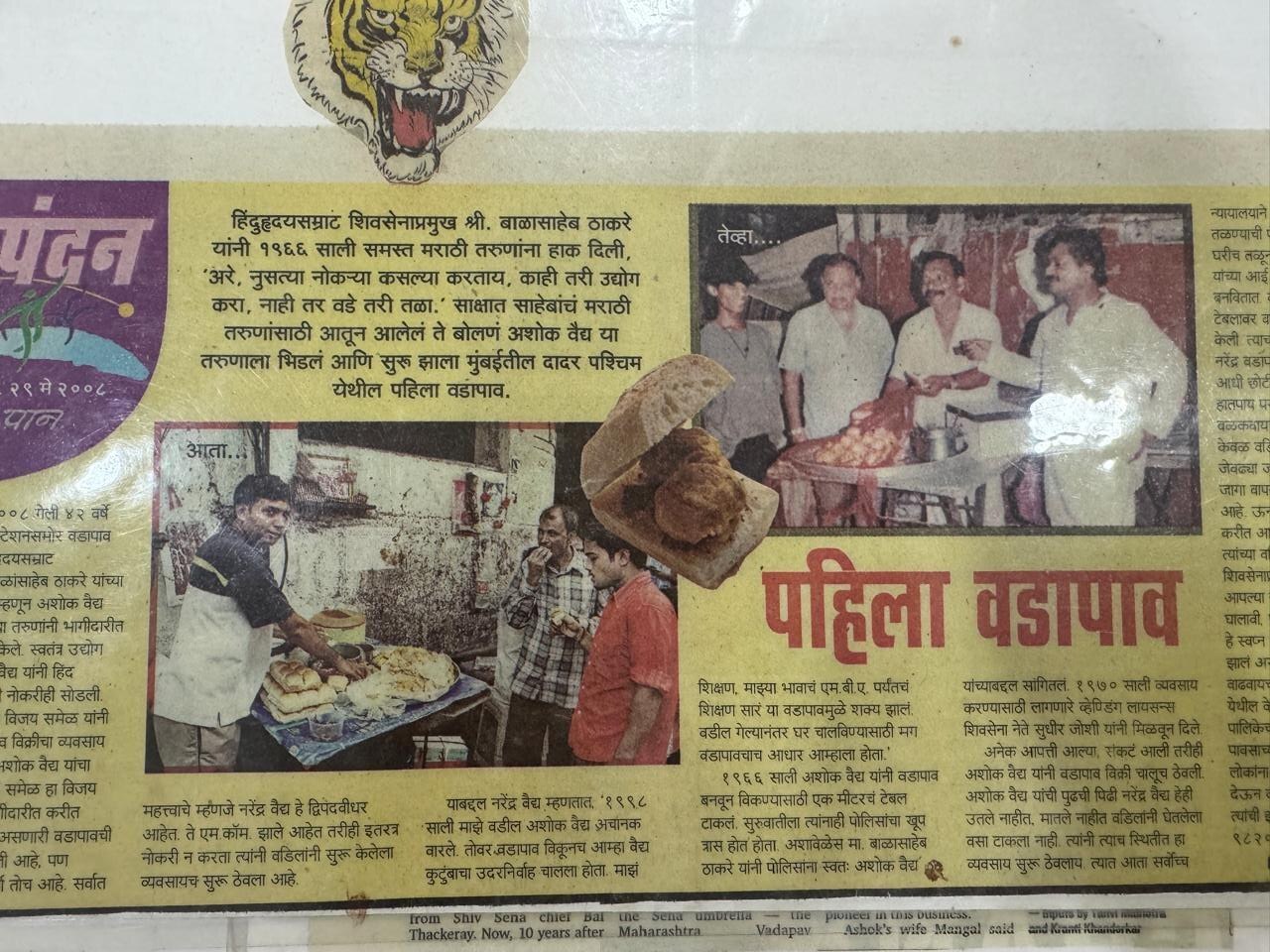
Marathi newspaper archive clipping about the Ashok Vaidya vada pav story
Marathi press coverage from the project archive, now displayed upright and uncropped so the original page remains readable as an archival object.
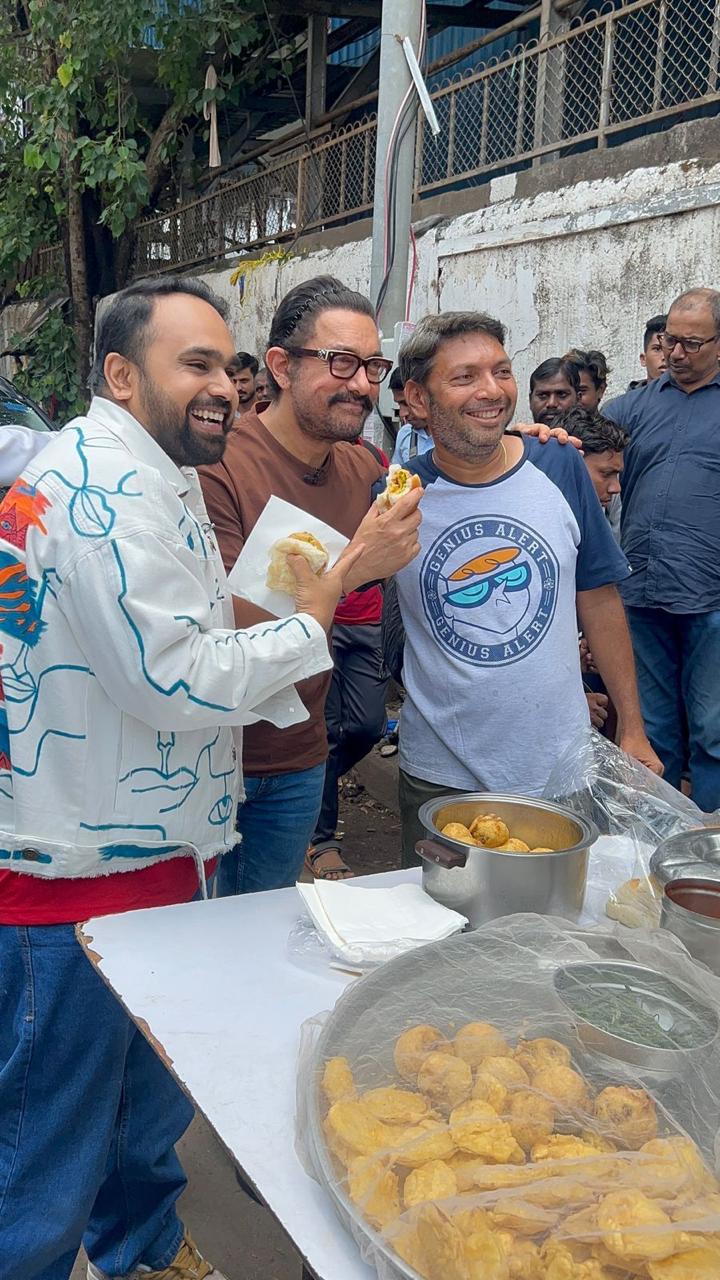
Visitors enjoying vada pav at a street-side counter
Street-side food culture: the snack is most alive when it is served hot, eaten standing and shared in the middle of the city.
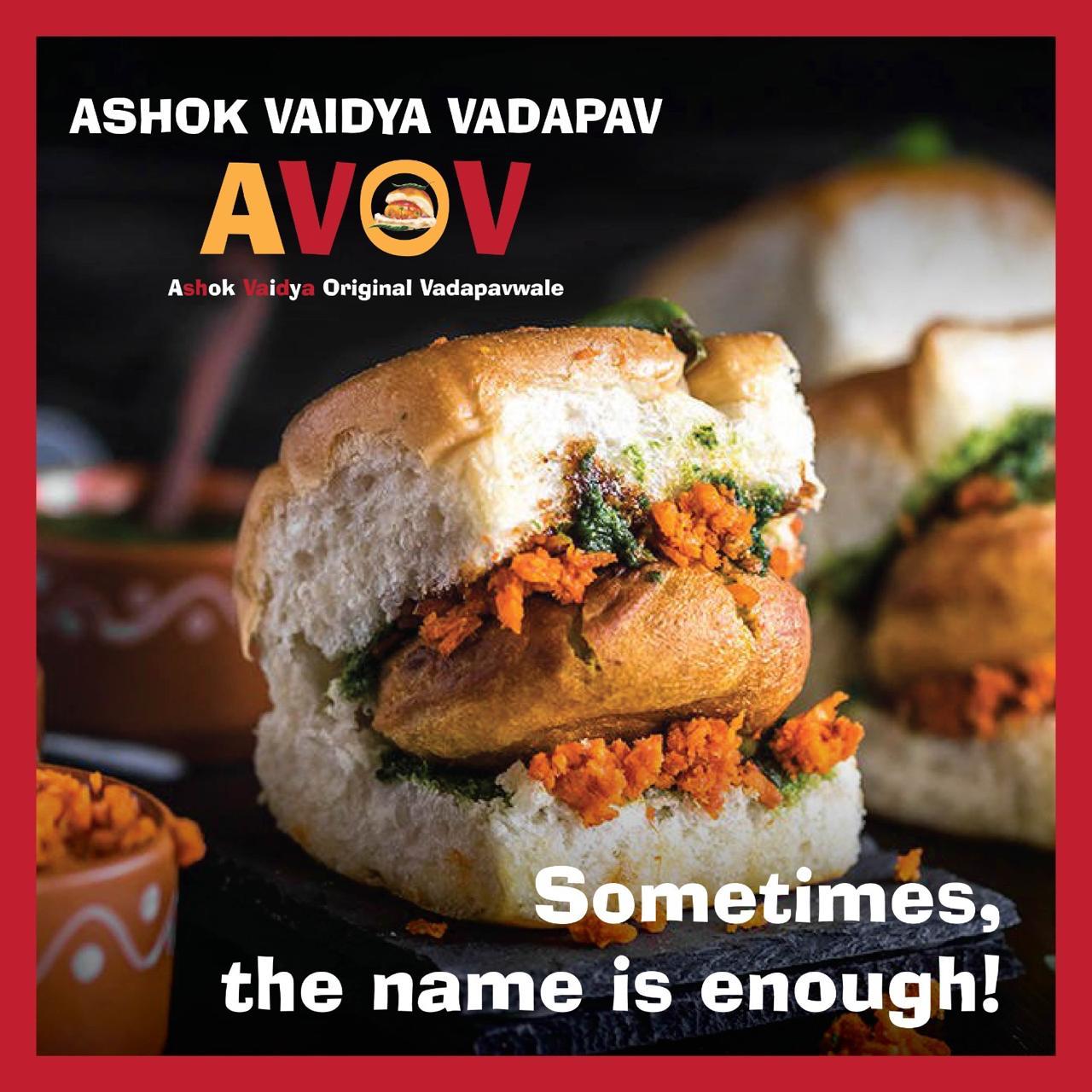
Close-up branded Ashok Vaidya vada pav visual
A tighter food frame gives the Media page a product moment without turning the archive into a separate gallery.
Coverage wall

The family story,
retold.

Vada Pav Inc.

The festival catalogue describes the short as the story of how vada, pav and chutney became a major Mumbai snack while introducing Ashok Vaidya as the man at the centre of the origin story.

View festival catalogue →

Meet Mumbai's Iconic Veggie Burger

A profile that places Ashok Vaidya outside Dadar Station in 1966 and reports that his son Narendra continued the family business there.

Read source →

History of the popular Mumbai snack

A long-form food-history piece covering Ashok Vaidya's Dadar Station story, the snack's rise and Narendra Vaidya carrying the legacy forward.

Read source →

The 1966 Dadar Station account

Indian Express notes that Ashok Vaidya of Dadar is often credited with starting the first vada pav stall outside Dadar railway station in 1966.

Read source →

Ashok Vaidya and Sons

The documentary revisits the family's version of the story and credits Narendra Vaidya, Mangal Vaidya and Vinayak Vaidya among its special thanks.

Watch film →

Ashok Vaidya's Dadar legacy revisited

A recent Marathi-language business/history feature again returns to Ashok Vaidya, Dadar railway station and the origin narrative.

Read source →
The documented family legacy

Ashok to
Narendra.

The second-generation story is important because the business remained connected to the same railway setting rather than becoming a conventional restaurant chain.

Ashok VaidyaWidely credited with the 1966 Dadar Station vada pav origin story.
Narendra VaidyaReported in multiple sources as continuing the family stall after his father's death.
Dadar Railway StationThe location that anchors the brand's heritage narrative.
Platform No. 1 sideLater sources place the family stall outside the Western Line side near Platform No. 1.
दादरDADARSame station. Another generation. Same Mumbai rhythm.

PRESS KIT: FIVE FACTS TO GET RIGHT.

1. Ashok Vaidya is widely credited with the 1966 Dadar Station origin story. 2. The first customers are commonly described as commuters and workers travelling through central Mumbai’s mill belt. 3. Ashok Vaidya died in 1998. 4. His son Narendra Vaidya continued the family business at Dadar Station. 5. The Vaidya family story has remained rooted in Dadar Station across generations, carrying the memory of the original street-food moment forward.
Media-ready modules

Built for
editors.

Fast fact

1966

The year most commonly cited in Ashok Vaidya's origin story.

Location shorthand

Dadar Station, Mumbai

The railway setting is essential to the story.

Legacy shorthand

Ashok → Narendra

A family story that stayed connected to the street and station.

Press / documentary enquiry

Need the family story, stills or a shoot?

For interviews, archival requests, family history, event collaborations and documentary enquiries, reach out through the contact page.

Contact us →